
How to Always Feel Like You’re On Holiday

011516The holiday season just ended and we are all too familiar with that sinking feeling when work is just around the corner and life’s same ol’ schedule will start allover again. Energy levels drop, moods worsen and that smile on your face is slowly beginning to fade. If all of this sounds familiar, then it seems like you’re the kind of person to chase after that good, liberating feeling. Heck, that’s what holidays are all about, right? – liberation. The freedom from having to do those dull house chores, writing those e-mails and waking up to the sound of the dreadful alarm clock.

But waiting on Friday to come or your birthday or for summer holidays is a complete waste of time. Learn how to channel that energy into something more productive, learn how to live and feel like you’re always on holiday, even when you’re at home washing the dishes or tackling through that pile of work at the office.

So how do we achieve this ‘permanent’ holiday?

  1. Spice things up by eating exotic meals from time to time.
    Instead of getting Chinese take-out for the third time this week, add more spice to your life by changing up the menu. Monday can end with a lively plate of Indian curry, Wednesday will include some fresh Korean noodles and Saturday is the time for Mexican with friends! If you can’t afford to eat out so luxuriously all the time, stop by the bookstore and get yourself a cookbook that can teach you how to prepare different cuisines from all around the world. It will be an even more rewarding experience to cook those different types of meals yourself.
  2. Refurnish your home and make it more fun!
    I don’t know about you, but one of the things that I love the most about going on vacation is getting to stay at a nice, clean and comfortable hotel room. The pillows are always fluffed, the décor is beautiful and the smell in the air is fresh and rejuvenating. Instead of waiting for your next holiday to revisit that dreamy hotel room, start making little changes around your house to mirror it.  If you love vibrant colors then take the time and get yourself some colorful little pieces of furniture to add to your cozy home. Perhaps a purple or green colored beanbag to go in the living room!
  3. Change the game.
    The ultimate answer is to the question above is to change your mindset. Holidays are great and we love them because it’s the time when we get to do what we want and not what we need to. But a simple switch in the way you view life’s demands is all it takes. For example: stop thinking “Ugh, I need to pay these bills.” Instead, think “I want to get my bills paid because that is the responsible thing to do and I will have less on my mind to worry about once I get it over with.” Ta-da! Instant gratification.
5 Apps All Successful Entrepreneurs Have On Their Phone

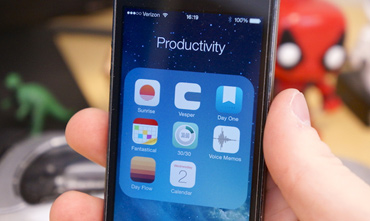
010516Successful entrepreneurs are often looked up to for their diligence, ambition and of course, organization skills. That last bit can get a little difficult to cope with without an assistant or at the very least, a productivity app. Whether you’re a wealthy entrepreneur or a newly established businessman/woman trying to make that company flourish, here are 5 apps you should always keep on your phone to make sure your schedule, ideas and meetings don’t get out-of-whack.
    1. Basecamp
      Have people working for your business from multiple locations around the world? Forget having to use 3-4 different social network platforms just to keep in touch and share documents. The app Basecamp will allow you to set up important dates, share docs, chat with and time your business partners/employees to make sure everyone is on the same page. This project management software is one of the best available and can easily be downloaded on your smartphone.


  1. Dropbox Life gets a lot easier when you have a single app to share all your documents on. Create an account, set up a folder, give your employees access and voilà! You’ve got yourself a virtual file that will store all those spreadsheets and documents. Access them any time and from anywhere through a single touch on your phone.
  2. Wakie Busy days and tiring nights mark the lifestyle of a successful entrepreneur. And perhaps for this reason it’s not so easy to get up in the morning. The app Wakie will set off an attention-grabbing alarm, followed by a phone call from a stranger somewhere in the world. That person will speak to you on the phone for up to a minute about your goals and aspirations for the day, in hope to get you jumping out of bed feeling refreshed and eager to tackle any problems that may come your way.
  3. Todoist A simple yet highly useful app that lets you type in your tasks for the day – use it and maybe you won’t forget to get that carton of milk your wife asked you to buy three days ago. The best part about this app is that you get to check off tasks that you’ve already completed, which will give you that sense of accomplishment to keep you happy and motivated.
  4. TrackMyStack.com If you’re an entrepreneur who doesn’t take nootropics then you’re pretty much 5 years behind the rest. What are nootropics? Think Limitless pill. While we’re not quite there yet, supplement companies have released focus, memory and productivity boosting formulas that contain nootropics anywhere from ginkgo biloba (something your nan may take for her memory) to the latest cutting edge pharmaceuticals, Noopept. LumUltra seems to be the top rated nootropic supplement and you can read about it here. With 15 mg of Noopept in each serving, you’ll be seeing a more motivated version of yourself with better focus and memory to top it all off.For those already on nootropics, TrackMyStack.com is a website app you can use to monitor your supplement regimen. On the app you will set new goals and then observe your progress as the days and months move along. The problem that most people have whilst on nootropics is that they forget to track their progress. With an app like TrackMyStack.com, you’ll be more aware of your current cognitive abilities and how they have improved overtime.

Protect your brain: Bacopa Monnieri

Bacopa monnieri is a perennial herb native of India typically used for relieving acute pain and inflammation, that has attracted considerable western interest owing to its diverse neuropharmacological properties. It has a central role in Ayurveda, a system of traditional Hindu medicine, for ulcers, tumours, ascites, enlarged spleen, indigestion, inflammations, leprosy, and biliousness.

Traditional knowledge have suggested that the plant enhances cognitive performance, and such traditional beliefs have now been scientifically tested through a handful of randomized, controlled human clinical trials, that suggest that bacopa monnieri is a safe novel neuroprotective agent that mediates oxidative stress & neurotoxicity perturbations in due to its apparent involvement on glutamartegic and cholinergic systems.

Bacopa monnieri seems to act via redox and enzyme induction, acetylcholinesterase inhibition and/or choline acetyltransferase activation, β-amyloid reduction, increased cerebral blood flow, and neurotransmitter modulation of acetylcholine, hydroxytryptamine, and dopamine. Thus, in other words, it seems that Bacopa monnieri takes a successful neuromodulatory role in oxidative status.
In addition to healthy elderly, bacopa monnieri has been proved to be beneficial for the prevention of cognitive deficits related to cerebral ischemia & schizophrenia; and it is recommended to treat neonatal hypoglycaemia (a condition that leads to neuronal death due to free radical accumulation). Furthermore, this critical trial, has found standardized extract of Bacopa monnieri 225mg/day to be effective in alleviating the symptoms of ADHD and was well-tolerated by the children, except for social problems. World recall memory scores, strop tests, and depression & anxiety ones were the most representative, accordingly.

Bacopa monnieri appears to exhibit low toxicity in model organisms and humans; however, long-term studies of toxicity in humans have yet to be conducted; so moderation, as almost always with experimental compounds, is urged. As you may know, amount and results do not really follow an identity function in neuropharmacology, thus one should not expect better results with higher doses (we frequently face the opposite). So far, the safe amount clinical trials have been working with, with successful results, is 300 mg/day, without side-effects . Finally, taking Bacopa monnieri at night is recommended, since some users have experienced drowsiness after taking it. This may represent an advantage for the ones with sleeping problems.

Piracetam VS Noopept: Which Nootropic is More Effective?

101315 A lot of people ask which one of these nootropics is the true winner. So today, we’re going to take a closer look into what differentiates two of the most highly rated nootropics in the world.


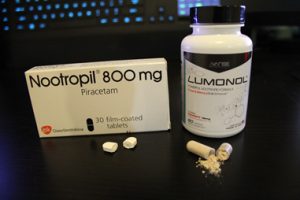
Piracetam was the first to enter the game. This supplement was designed in 1964 to boost cognitive function and memory recall. Piracetam works by increasing the levels of acetylcholine – an important neurotransmitter in the brain that is responsible for memory, learning and mood regulation. The compound has also been proven to cross the blood-brain barrier effectively, thus helping neural communication between the two hemispheres. As a result, memory, learning capacity and focus are enhanced.

Noopept, however, was soon discovered to be a better alternative to Piracetam. This cognitive enhancer is 1000x more potent than Piracetam, which is why large doses are not necessary. Noopept works with the glutamate receptors in our brain – channels that control many vital neurotransmitters. By enhancing the effectiveness of these receptors, mental alertness, focus, memory recall and general cognition are improved. This incredible substance is also known to help with verbal fluency, so say goodbye to stuttering! Another fascinating aspect of Noopept is that it prevents oxidation damage in the brain, which helps to reduce fatigue and anxiety levels. This leaves us with improved memory, better focus, and the energy to get everything done. And that’s exactly why our esteemed product, LumUltra, readily packs a 15mg dose of Noopept in each pill.

So there you have it!

What is Oxidative Stress?

Oxidative stress is a target phrase nootropic users recognize when reading about the neuroprotectant and antioxidant properties of different substances, and the harmful and counterproductive of others. Nevertheless, do you really know what does oxidative stress entail? Here we explain it to you in simple words.

While oxygen is essential for human life, it also plays a role in the breakdown of the same body’s functionality by damaging cells through oxidative processes. Oxidation, in it self, is a pretty natural and continuum process: it is happening right now in our bodies and surroundings. Nevertheless, some of these disturbances are toxic when involving free radicals.

Imagine an iron pipe lying on the ground. As it weathers years of rain, it begins to rust.

Free radicals are those toxic water drops which make your body “rust” through its lifetime.

Thus, a free radical is an uncharged oxygen molecule that has one or more unpaired electrons, making it highly reactive (and often short-lived) with other molecules, such as DNA, protein or lipid; and “steal” their electrons in order to become stabilized. Hence, we get a destabilization in the other organic molecules that can trigger a large chain of free radical reactions that causes serious damage to cells.

In this way, oxidative stress becomes essentially an imbalance between the production of free radicals and the ability of the body to counteract or detoxify their harmful effects through neutralization by antioxidants. An imbalance between oxidants and antioxidants is the underlying basis of oxidative stress, and the general mechanism that explains aging.

In conclusion, every cell that utilizes enzymes and oxygen to perform functions is exposed to oxygen free radical reactions that have the potential to cause serious damage to the cell. Antioxidants are molecules present in cells that prevent these reactions by donating an electron to the free radicals without becoming destabilized themselves. While the free radicals are greedy, antioxidants are generous.

Melatonin: A Review

Melatonin is an endogenous neurohormone found in animals, plants, fungi and bacteria that serves as a modulator in the nervous system and as an important neural antioxidant. In animals, it is a hormone that anticipates the daily onset of darkness; thus, the hormone can be used as a sleep aid and in the treatment of some sleep disorders as an anti-stress agent. Results of a series of original investigations devoted to the antidepressant, anxiolytic, and nootropic activity of the pineal hormone melatonin are summarized. It is established that a decisive role in this activity belongs to the chronotropic properties of melatonin.

As stated, in animals, melatonin is involved in the synchronization of the circadian rhythms of physiological functions including sleep timing, blood pressure regulation, seasonal reproduction and many others. Many of melatonin’s biological effects in animals are produced through activation of melatonin receptors, while others are due to its role as a pervasive and powerful antioxidant, with aparticular role in the protection of nuclear and mitochondrial DNA.

As you might already know, sleep deprivation has been shown to induce oxidative stress (neuronal death, reactive astrogliosis, memory impairment and cognitive dysfunctions) which causes cognitive impairment. Melatonin, an endogenous potent antioxidant, protects neurons from oxidative stress in many disease models. This 2013 study investigated the effect of melatonin against sleep deprivation-induced cognitive impairment and attempted to define the possible mechanisms involved. Melatonin (15 mg/kg) was administered to the rats via intraperitoneal injection. The possible mechanism may be attributed to its ability to reduce oxidative stress and increase the levels of CaMKII and BDNF in CC and hippocampus. Thus, while prolonged sleep deprivation could lead to profound negative health consequences, such as impairments in vital biological functions of immunity and cognition, it can be stated that melatonin possesses powerful ameliorating effects against those harmful insults.

Moreover, in this study, treatment with melatonin attenuated the effect of propoxur (a powerful neurotoxic carbamate pesticide) on oxidative stress. The results of the study showed that melatonin has the potential to attenuate cognitive dysfunction and oxidative stress induced by toxicants like propoxur, which has been shown to adversely affect memory and induce oxidative stress on both acute and chronic exposure. Thus, melatonin has strong antioxidant and anti-inflammatory effects that help to restore body’s immune and cognitive functions.

Furthermore, it seems that melatonin could contribute to nootropics’ efficiency. In this study, The pineal hormone melatonin (0.1 mg/kg) differently changed the behavioral shifts induced by piracetam, bilobil, and ginseng in the open-field and elevated plus-maze tests in rats. Melatonin more effectively optimized memory in the model of passive avoidance conditioned reflex. It is suggested that the observed enhancement of the specific activity of nootropic drugs is related to the melatonin-induced changes in the hippocampal activity.

“Pineal hormone melatonin stabilizes mental activity of man and animals due to its somnogenic, anxiolytic, antidepressant and nootropic properties. Melatonin effects are based on the synchronization of biological rhythms via the influence on the cerebral structures which control biological rhythms and emotions and normalize endocrine and immune state”

Thus, these results suggest that melatonin administration might improve the cognitive abilities, at least partially, by reducing the age-related degeneration of basal forebrain cholinergic neurons. So far, a safe supplement you can take to boost nootropic action and sleep quality.

Fish Oil and Cognitive Support: Without Consensus

Humans are currently getting fish oil from the tissues of oily fish such as sardines, salmon, and tuna. However, the fish itself does not produce the famous omega-3 fatty acids contained in the oil, but they rather accumulate them by consuming microalgae, the original holder of EPA and DHA (too bad we cannot synthesize it by ourselves!). Together with a high quantity of antioxidants, these compounds prevent the oxidative degradation of lipids that results in cell damage. Thus, omega-3 fatty acids are thought to be important for normal cellular metabolism.

Predictably, the health effects of fish oil supplementation seem to be broad and diverse: cardiovascular health, hypertension, inflammation, developmental disorders, mental health and even cancer – with poor evidence, but the results of the clinical trials are not conclusive. While the animal evidence available in regard to cognitive functioning is rather uniform (for example, it seems that fish oil significantly attenuates reactivity to mental stress in dogs, cats, and mice), the one directed to healthy humans is still controversial.

There are certainly studies that advocate for its efficacy, from schoolchildren showing improvement in cognitive function after consuming a bread spread containing fish flour, to subjects with mild cognitive impairment who showed improvement in their memory function. However, the actual last studies challenge these results, arguing that potential target populations who would more likely benefit from omega-3 fatty acids would be just Alzheimer’s disease patients.

As with any current brain supplement, ideally, further research has to be done until reaching consensus. Nevertheless, it should be said that fish oil supplementation does not pose a safety concern for adults. And as any nootropics user have probably realized, the fact that we, as a scientific community, do not understand how something works (yet) does not mean that it doesn’t work at all.

  1. For a good review on “It works”, see http://www.ncbi.nlm.nih.gov/pubmed/24908517
  2. For a good review on “It does not”, see http://www.ncbi.nlm.nih.gov/pubmed/18678826
  3. For a good general review, see http://www.ncbi.nlm.nih.gov/pubmed/17012979

Contraceptives: a Nootropic for Women?

Besides the nervous system, the endocrine system is a major communication system between the body and the brain. While the nervous system uses neurotransmitters as its chemical signals, the endocrine system uses hormones. Thus, the pituitary gland secretes factors into the blood that act on the endocrine glands to either increase or decrease hormone production. This process is known as a feedback loop, and it entails communication from the brain to the pituitary to an endocrine gland and back to the brain. Knowing this beforehand, it should not be a surprise that hormonal medication may change how our brains look -its structure- and hence behave -its performance-.

Hormonal contraceptives are on the market for more than 50 years with a widespread use of 100 million women worldwide with high reported levels of satisfaction. Nevertheless, the effects of the synthetic steroids contained in the pill on brain and cognition have barely been studied. Thus, last year -2014- use of contraceptives & changes in brain structure was a fashionable topic among neuroscientists. Here we present you the last findings, which might be of special interest among female nootropic users.

According to a new UC Irvine research, women who use contraceptives experience memory changes. Not a deficit, not an improvement, but a qualitative change: women who are taking the pill were found to remember better the gist of an emotional event, while the women who are not using it are better at retaining details. This cognitive change makes sense, explains researcher Nielsen, since contraceptives suppress sex hormones such as estrogen and progesterone to prevent pregnancy, and this hormones were previously killed to women’s strong “left brain”.

Thus, hormonal contraceptives are nowadays suspected of being masculinizing brain patterns activation. In this study, women’s number processing was examined and male-like brain activation patters were found when taking the pill, and a relative enhancement in processing social cues. However, the most consistent finding is improved verbal memory with OC use, and a small but significant enhancement in visuospatial ability. Interestingly, these cognitive changes seem to have a long-term nature, predicting better cognitive outcomes later in life, even years after discontinued use. In this way, this study found that contraceptive ever users performed significantly better than never users in the domain of visuospatial ability, and speed & flexibility, with duration-dependent increases in performance, especially in ever users with ≥ 15 years of use.

On the other hand, a possible effect of oral contraceptives on emotion recognition was observed, strengthening the theory of brain masculinization. While it is well known in neuropsychology that females tend to perform significantly better at recognizing faces and emotions; in this clinical trial, users of oral contraceptives detected significantly fewer facial expressions of sadness, anger and disgust than non-users.

A few years back, a study discovered that users of oral contraceptives had larger volumes of grey matter (brain tissue consisting of nerve cell bodies) in certain areas of the brain. These past findings seem to correlate pretty well with the neurobehavioral changes observed today in the described studies.

In conclusion, the way the brain responds to hormones indicates that the brain is very malleable and capable of responding to environmental signals, creating a strong demand for additional studies in how the pill affects the nervous system from the molecular to the behavioral level.